
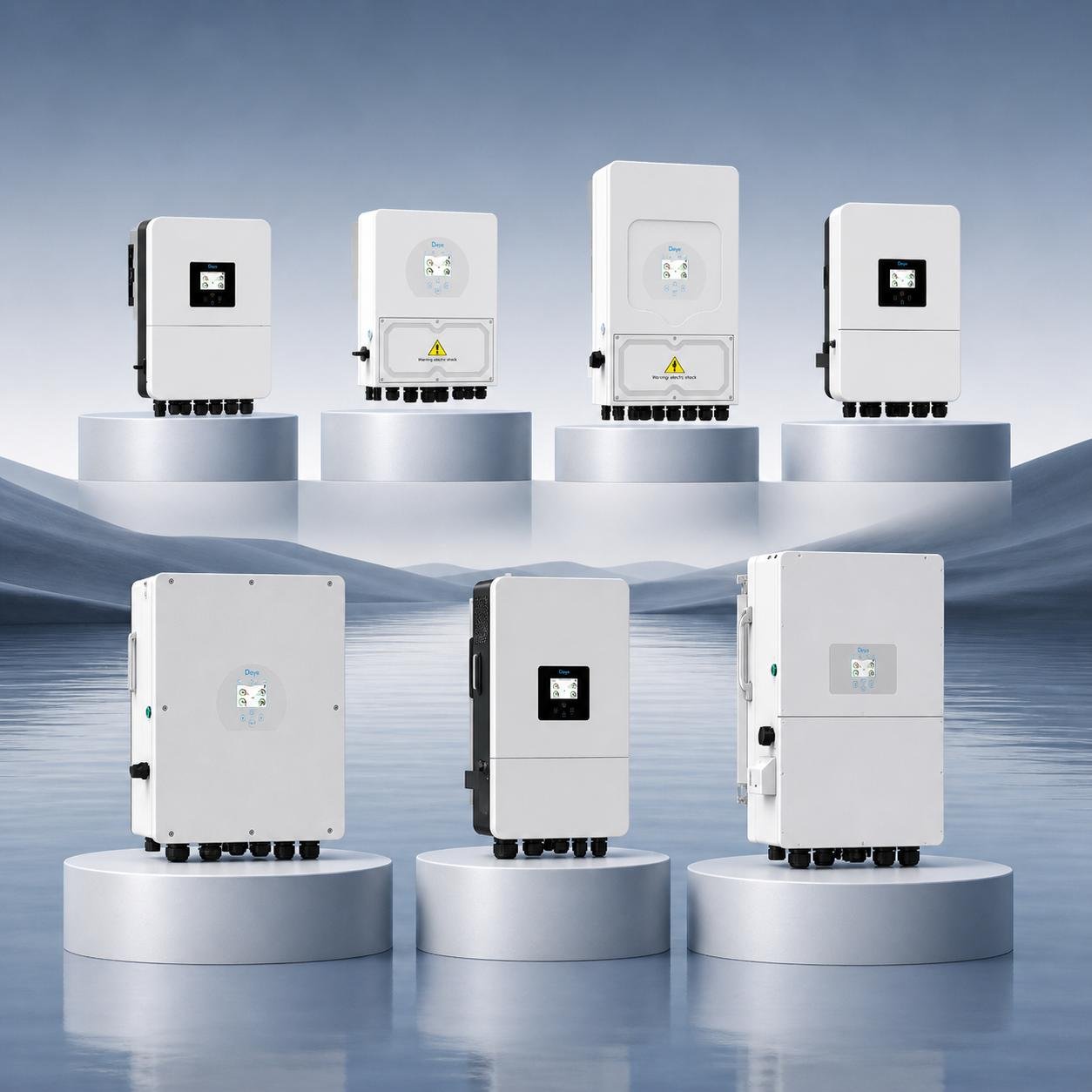
Hybrid Solar Inverters for Homes and Businesses in Kenya
Hybrid solar inverters combine solar power conversion with battery energy storage management. Depending on the model and system configuration, they can use electricity from solar panels, charge batteries, supply connected loads and draw power from the grid or another supported source.
At Globus Solar LTD, we supply hybrid inverter solutions for residential, commercial and selected industrial applications. We help customers choose suitable inverter capacities based on their electrical loads, solar panel array, battery requirements and backup power needs.
How Does a Hybrid Solar Inverter Work?
A hybrid inverter manages electricity from solar panels, batteries and other supported power sources. It converts the DC electricity produced by solar panels into AC electricity for compatible appliances and manages battery charging and discharging according to its design and settings.
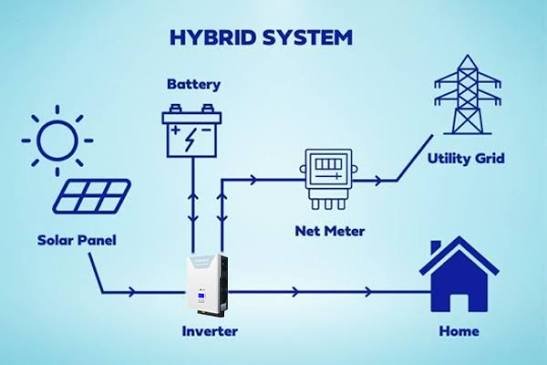
1. Solar Panels
Solar panels generate DC electricity from sunlight. The inverter uses the available solar power within its operating limits.
2. Powering Appliances
The inverter converts DC electricity into AC electricity to supply compatible household or business loads.
3. Charging the Battery
When configured to do so, the inverter directs available energy to charge a compatible battery for later use.
4. Grid or Backup Supply
Depending on the model and configuration, the system can use grid electricity and provide backup power through a designated backup output when grid supply fails.
A Flexible Solution for Solar Energy Management
A hybrid solar inverter can help households and businesses make better use of solar energy, manage battery storage and maintain power to selected loads during grid interruptions when the system is designed for backup operation. Actual performance depends on inverter capacity, solar generation, battery storage, load demand and system configuration.
Hybrid Inverter Brands Available at Globus Solar LTD
We supply hybrid inverter solutions for different residential and commercial solar applications. Available models, capacities and features vary by brand and stock availability.
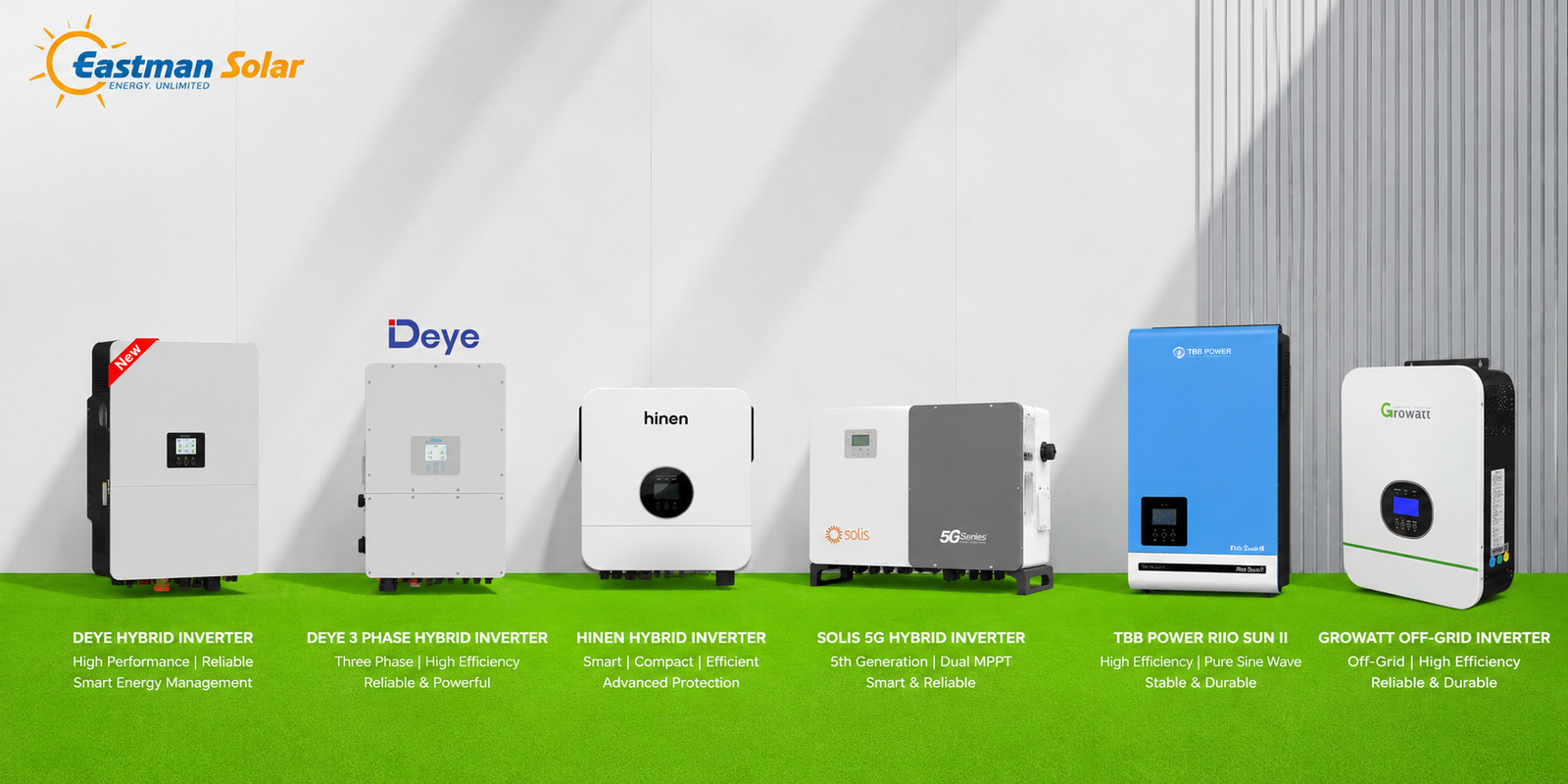
Our Brands
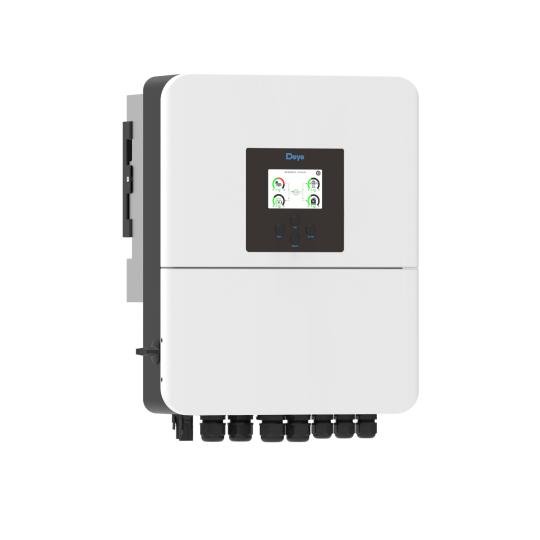
DEYE Hybrid Inverters
Hybrid inverter options for compatible solar panels, battery storage and grid-connected applications.
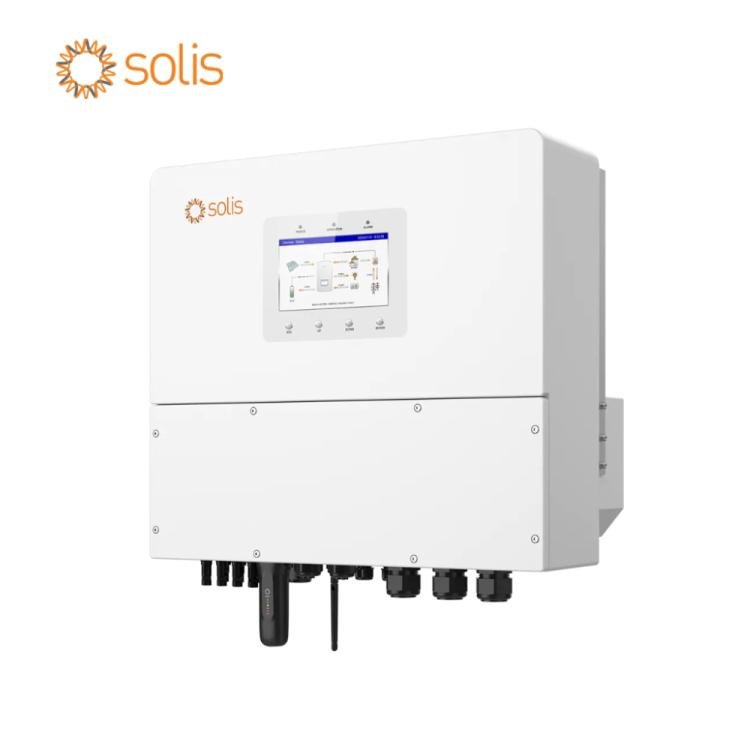
Solis Hybrid Inverters
Inverter solutions for selected residential and commercial solar energy systems.
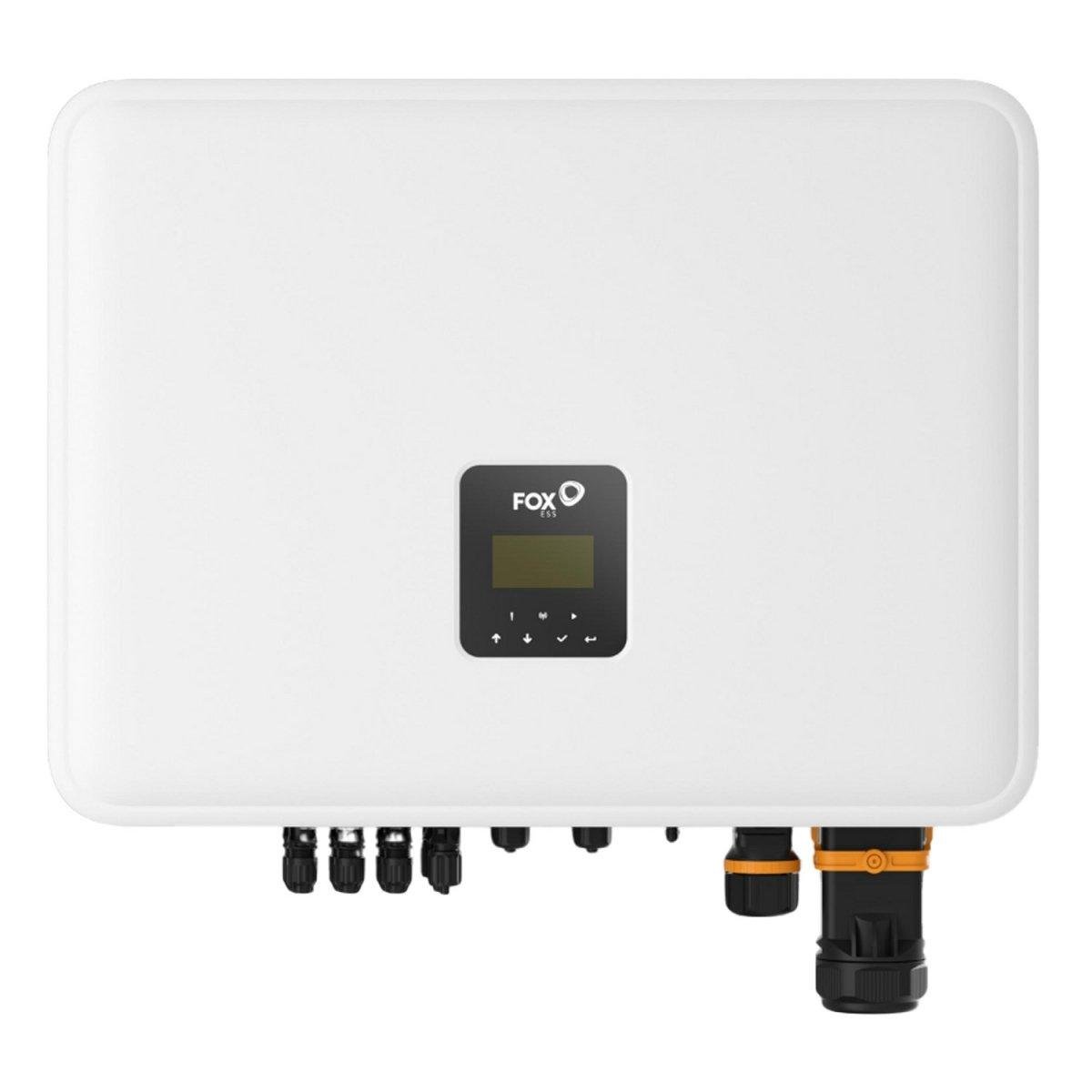
Fox Hybrid Inverters
Options for solar power conversion and battery storage, depending on the model.
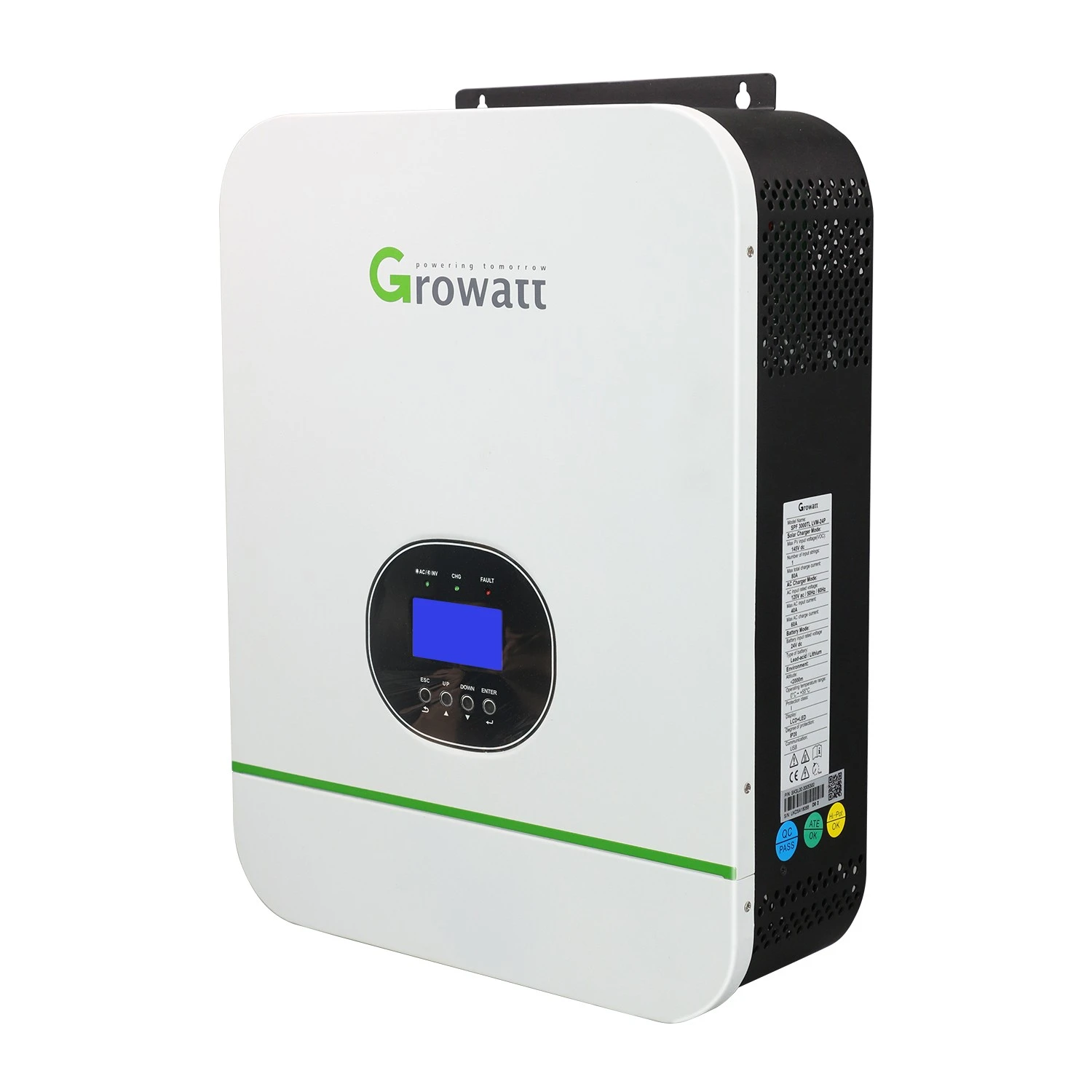
Growatt Hybrid Inverters
Options for solar power conversion and battery storage, depending on the model.
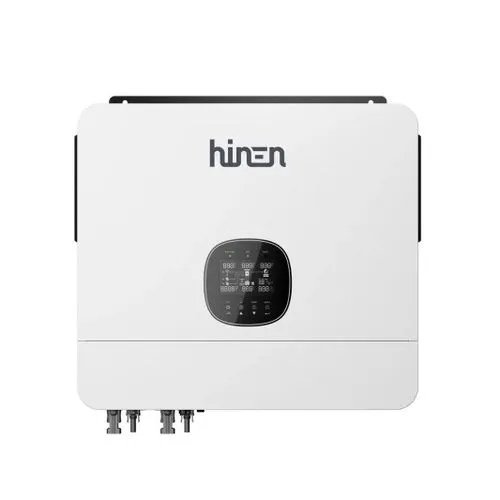
Hinen Hybrid Inverters
Solutions for selected residential and other compatible solar applications.
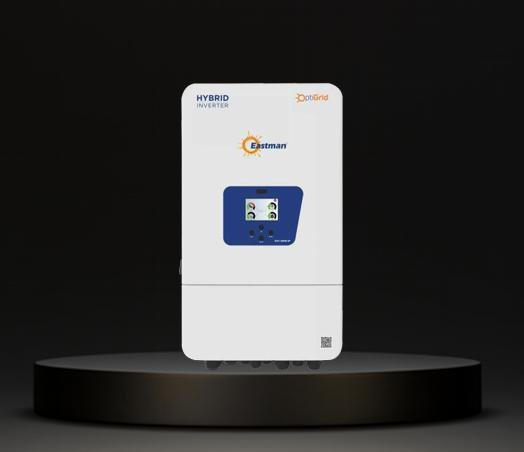
Key Features of a Hybrid Solar Inverter
Hybrid inverters differ in power capacity, battery compatibility, solar input limits and backup functionality. Choosing the right model means matching these features to your property’s energy requirements.
1. Intelligent Energy Management
Hybrid inverters coordinate power from solar panels, batteries and the electricity grid to help meet your energy needs efficiently.
2. Battery Compatibility
Compatible models work with supported lithium or lead-acid batteries, allowing you to store excess solar energy for later use.
3. High Solar PV Input Capacity
Select an inverter with suitable solar input capacity to match your solar panel array and make effective use of available sunlight.
4. Backup Power Capability
Depending on the model and system design, a hybrid inverter can supply selected loads from batteries during grid outages.
5. Smart Monitoring
Supported monitoring systems let you track solar generation, battery status, grid consumption and energy use.
6. Single-Phase and Three-Phase Options
Depending on the product range, hybrid inverters are available for residential, commercial and other applications with different electrical requirements.
7. Built-In Protection Features
Depending on the model, protection functions may include overload, short-circuit, over-temperature and other electrical safeguards.
8. Flexible System Expansion
Some models support parallel operation or system expansion, making it possible to increase capacity where the manufacturer permits it.
Find the Right Hybrid Inverter for Your Needs
At Globus Solar LTD, we help homeowners, businesses and institutions select hybrid inverters based on their energy consumption, solar panel capacity, battery requirements and backup needs. We supply solutions from recognised brands, subject to model availability, and can advise on suitable system configurations.
Hybrid Solar Inverter Applications
Hybrid solar inverters can support a wide range of energy needs by combining solar power, battery storage and grid electricity where available. At Globus Solar LTD, we help customers choose suitable systems for residential, commercial and selected industrial applications across Kenya.
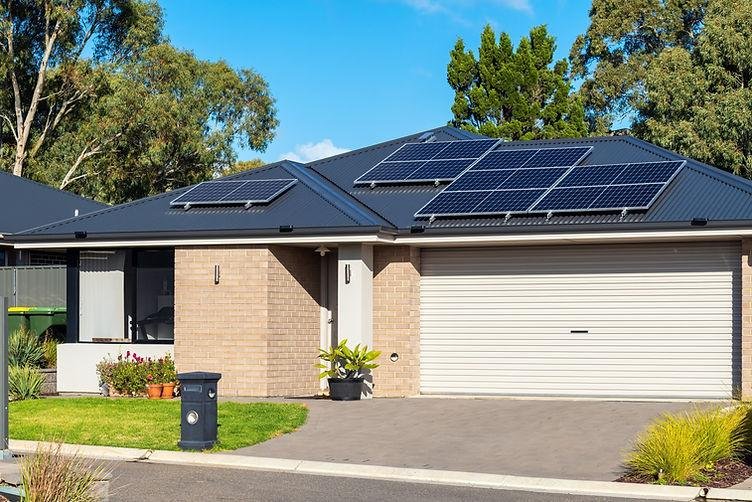
Homes and Residential Properties
Power household appliances, lighting, entertainment systems and other suitable loads while using stored solar energy when needed.
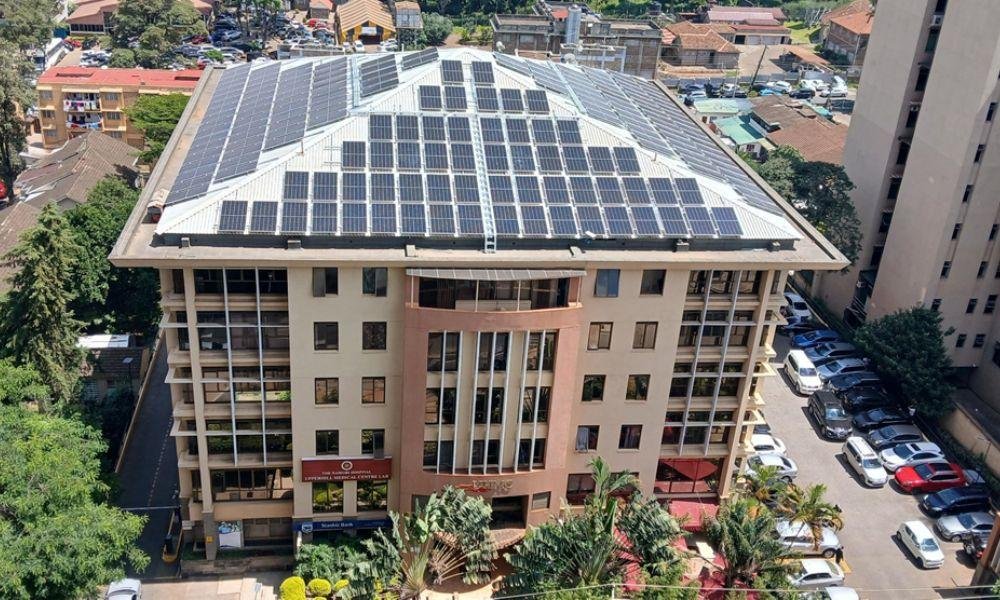
Offices and Commercial Buildings
Help businesses reduce grid electricity consumption and manage their energy use with appropriately designed solar and battery systems.
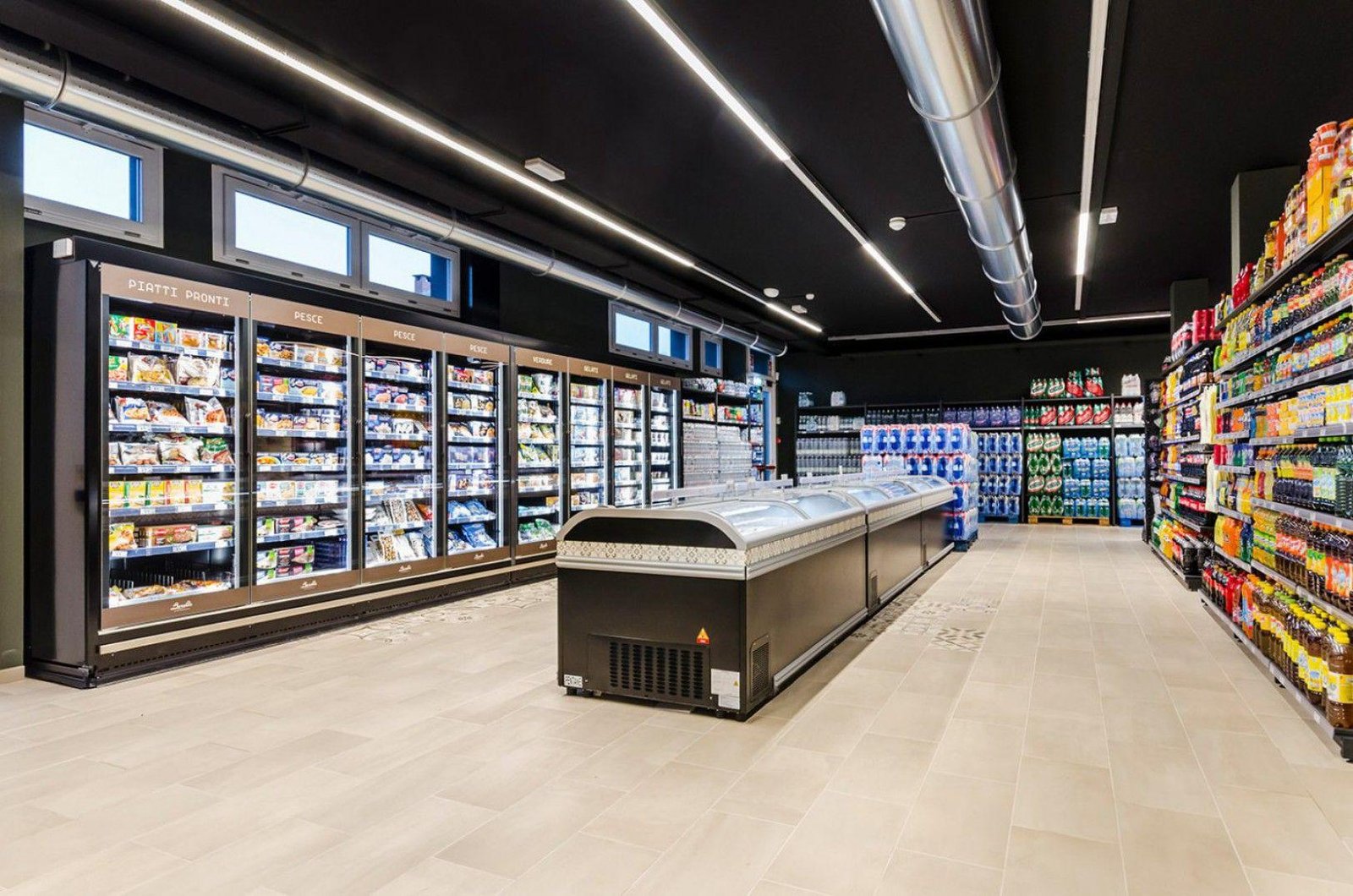
Shops and Retail Businesses
Support essential lighting, computers, point-of-sale equipment and other compatible loads, subject to inverter capacity and backup design.
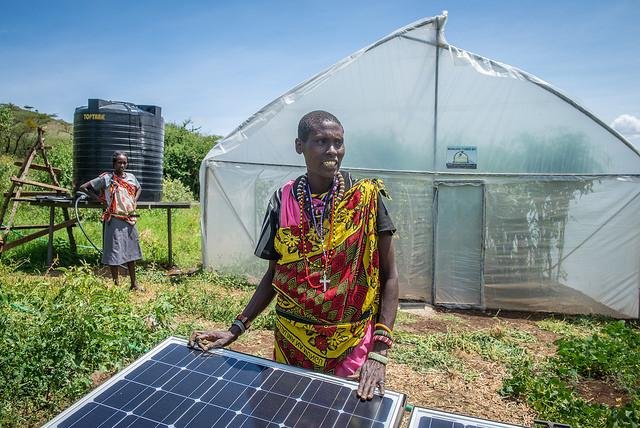
Farms and Agricultural Facilities
Provide energy for suitable farm buildings, lighting, monitoring equipment and selected agricultural loads. Pumps require careful sizing and starting-current assessment.
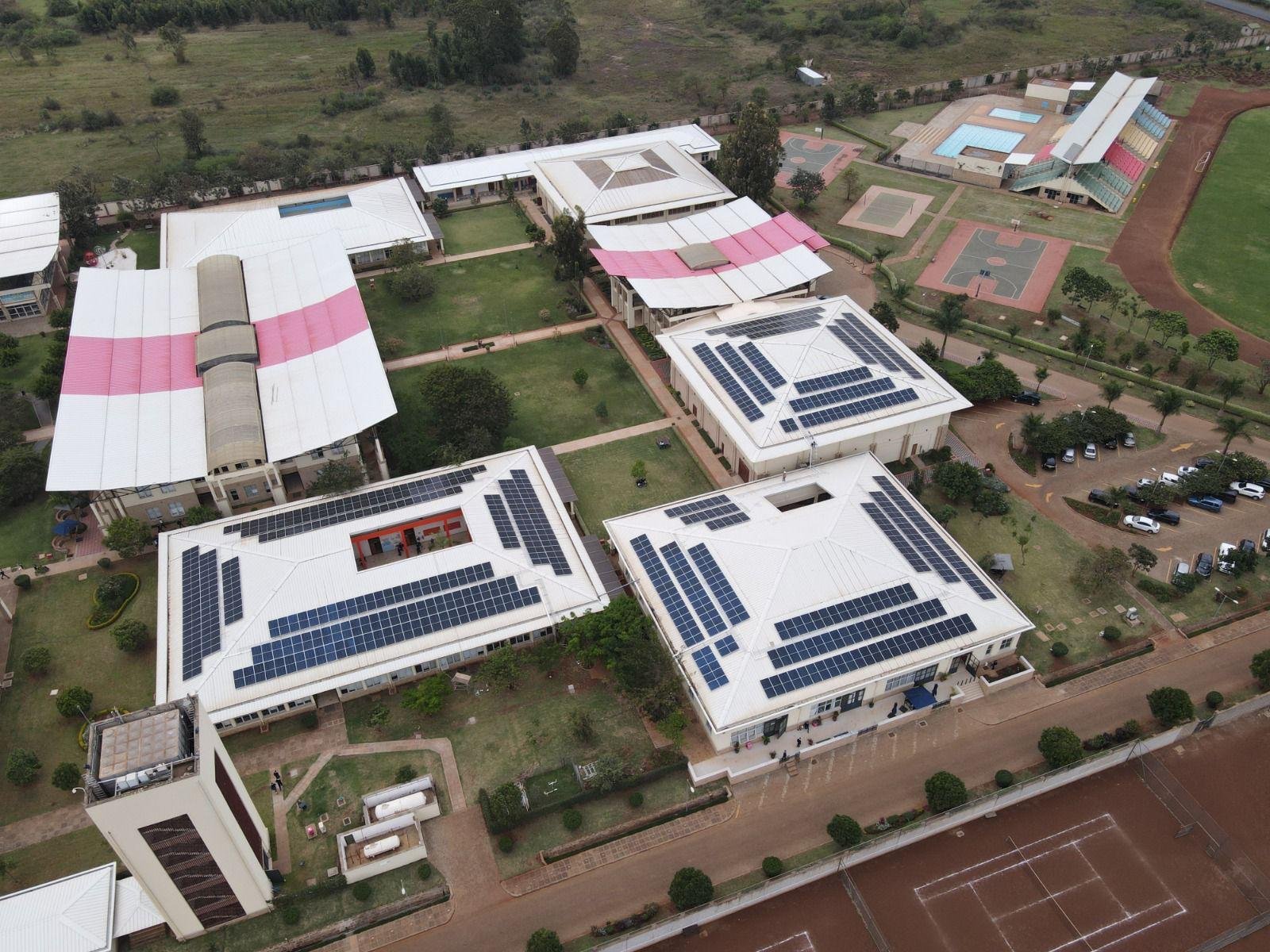
Schools and Institutions
Support classrooms, offices, computer rooms and other selected loads, helping institutions make better use of solar energy.
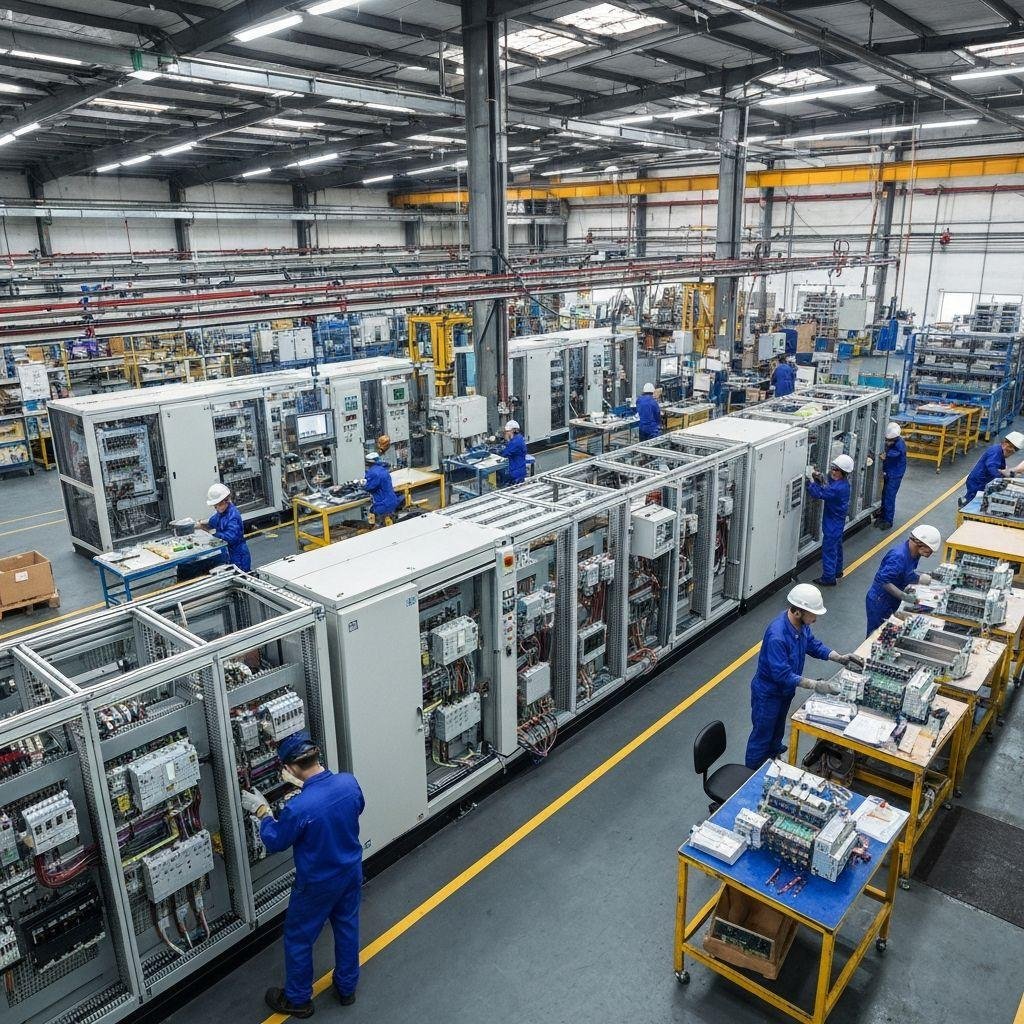
Workshops and Selected Industrial Applications
Suitable hybrid systems can serve selected equipment and operational loads where the inverter rating, phase configuration and surge capacity meet the requirements.
How to Choose the Right Hybrid Solar Inverter
Choosing the right hybrid inverter is essential for getting reliable performance from your solar power system. The ideal inverter depends on your electricity consumption, the appliances you want to power, your battery storage requirements and whether your property uses single-phase or three-phase electricity.
1. Your Power Consumption
Calculate the total power demand of the appliances you intend to run simultaneously. Consider both normal operating loads and appliances with high starting currents.
2. Solar Panel Capacity
Check the inverter’s permitted solar PV input capacity, voltage range and maximum input current to ensure compatibility with your planned solar array.
3. Battery Storage Requirements
Choose compatible batteries with sufficient usable capacity to support your essential loads for the desired backup duration.
4. Single-Phase or Three-Phase Supply
Match the inverter to your property’s electrical supply and load distribution. Commercial and industrial sites may need a three-phase solution.
5. Backup and Expansion Needs
Decide which appliances must remain powered during an outage and whether you may need additional batteries or inverter capacity in the future.
6. Warranty and Technical Support
Consider product warranty terms, installation quality, monitoring features, spare-parts availability and access to technical assistance.
Professional Hybrid Solar Inverter Installation in Kenya
At Globus Solar LTD, we provide solar energy solutions tailored to the needs of homes, businesses and institutions. We help customers select suitable hybrid inverters, compatible batteries and solar panels, with system design and installation based on their energy requirements.
1. System Assessment and Design
We assess your energy needs, intended backup loads, solar panel capacity and battery requirements to help determine a suitable system configuration.
2. Professional Installation
Proper installation, electrical protection, cable sizing, earthing and configuration are essential for safe and reliable system operation.
3. Testing and Commissioning
System checks and configuration help confirm that the inverter, batteries and solar array operate within the manufacturer’s specifications.
4. After-Sales Support
We assist customers with product guidance and technical support in accordance with the applicable warranty terms and service arrangements.
Frequently Asked Questions
1. What is a hybrid solar inverter?
A hybrid solar inverter manages power from solar panels, batteries and the electricity grid, depending on the model and system configuration. It helps you use solar energy, store excess energy and manage your electricity supply.
2. Can a hybrid inverter work without batteries?
Some hybrid inverters can operate without batteries under specified conditions, while others require particular configurations. Check the manufacturer’s requirements for the exact model before purchasing.
3. Can a hybrid inverter provide power during a KPLC outage?
Yes, if the inverter supports backup operation and has an available energy source, such as a charged battery or suitable solar generation. The backup output and supported loads depend on the inverter and installation design.
4. Which size of hybrid inverter do I need for my home?
The correct size depends on your appliances, simultaneous power demand, starting currents, solar array and future requirements. A load assessment helps determine whether a 5 kW, 8 kW, 12 kW or larger inverter is appropriate.
5. Which batteries are compatible with hybrid inverters?
Compatibility depends on the inverter model, battery chemistry, voltage, communication protocol and manufacturer-approved settings. Always confirm compatibility before connecting a battery.
6. Can I expand my hybrid solar system in the future?
Some systems support additional batteries, parallel inverters or increased solar capacity. Expansion depends on the model’s limits and the design of the original installation.
7. How long can a hybrid inverter power my appliances during an outage?
Backup duration depends on usable battery capacity, appliance consumption, inverter efficiency and available solar generation. Larger batteries may extend backup time when correctly sized.
8. Where can I buy hybrid solar inverters in Kenya?
Globus Solar LTD supplies solar energy products and solutions in Thika, Kiambu and surrounding areas, with enquiries welcome from customers across Kenya. Contact our team to check available brands, models, prices and installation options.